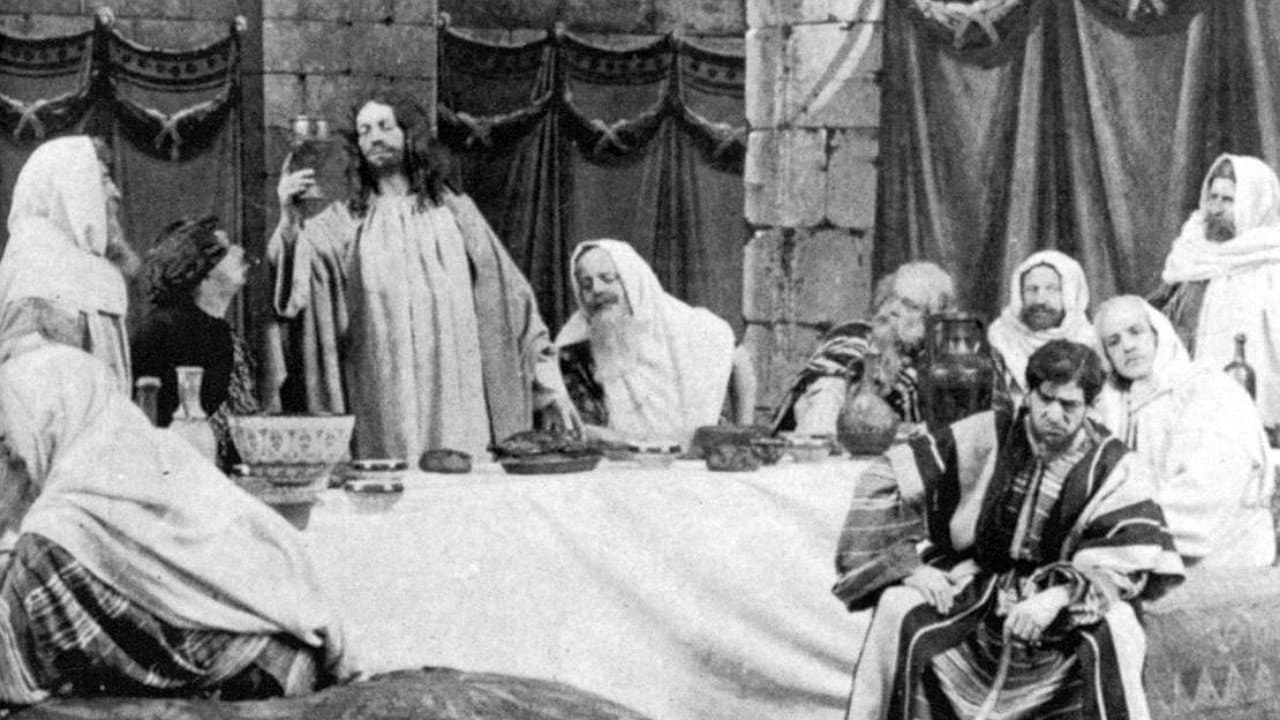
La Vie du Christ
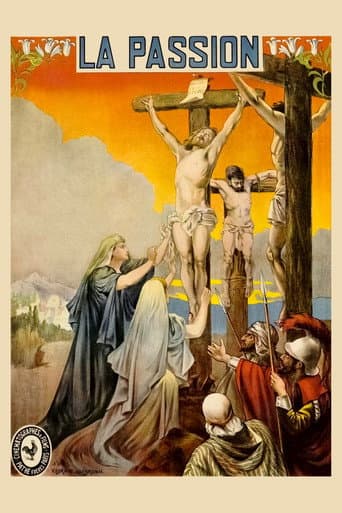
Alice Guy-Blaché’s La Vie du Christ (1906) is one of the most ambitious films made in the first decade of cinema, a 33-minute telling of the life of Jesus in 25 tableaux that was, at the time of its release, the largest production Gaumont had ever undertaken. Guy-Blaché marshaled over 300 extras, elaborate sets designed by Henri Ménessier, and a visual scheme drawn from James Tissot’s celebrated illustrated Bible, which she had purchased in 1900. The result feels less like narrative drama and more like a series of devotional paintings brought to life, each composition dense with figures, carefully staged gestures, and a painterly attention to the gray tones of early film stock. The film covers the full arc from the Nativity through the Resurrection, but its weight falls heavily on the Passion, with the road to Golgotha rendered in distinctly Catholic terms, including the appearance of Saint Veronica and her veil, a tradition with no basis in the Gospel accounts. Guy-Blaché employed double exposures, dissolves, and masking effects to conjure angels and visions, techniques she had been refining across hundreds of films since beginning her directorial career at Gaumont in 1896. The scale of the production anticipates the Biblical epics of the following decade, and it is worth remembering that D.W. Griffith would not direct his first film for another two years. Guy-Blaché’s place in cinema history has been a long, slow act of recovery. For decades she was effectively erased from the record, her prolific output at Gaumont misattributed or forgotten, her later work at her own Solax studio in Fort Lee, New Jersey, largely lost. Of the nearly 400 films she directed between 1896 and 1920, only a fraction survive. La Vie du Christ endures as evidence of what she was capable of at the height of her powers: a filmmaker working at the largest scale available to anyone in 1906, and doing so with a visual intelligence and organizational command that few of her contemporaries could match.
writer
cinematographer