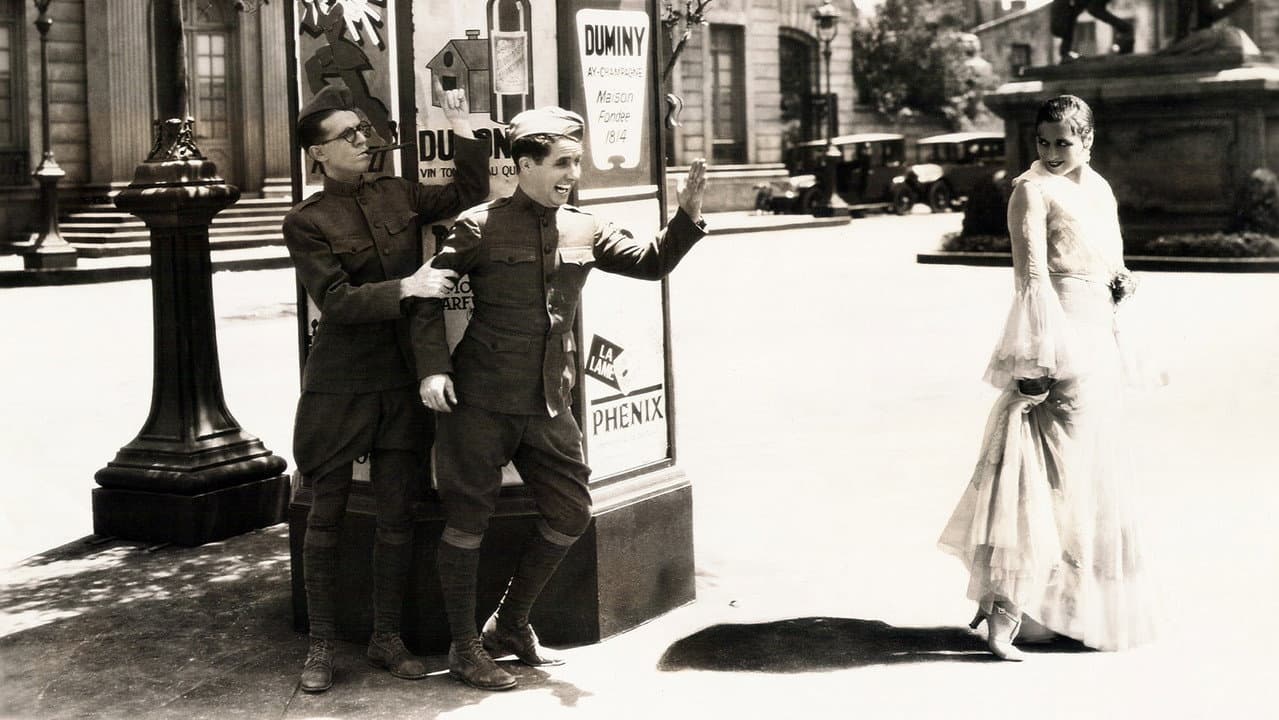
Released in 1930, Half Shot at Sunrise is the second starring vehicle for Wheeler & Woolsey, the wildly popular comedy duo whose films kept RKO profitable in the early sound era but who have since fallen into undeserved obscurity. Bert Wheeler and Robert Woolsey play two American doughboys gone AWOL in WWI Paris, dodging military police and chasing women through a plot that’s really just a clothesline for vaudeville routines, wordplay, and pre-Code innuendo. The screenplay — credited to Anne Caldwell, James Ashmore Creelman, and Ralph Spence, with an uncredited Roscoe “Fatty” Arbuckle — fires off gags at a pace that compensates for the stiff camera setups still typical of 1930 productions. Dorothy Lee, the duo’s frequent co-star, is a magnetic presence in her musical numbers with Wheeler, while Leni Stengel nearly steals the film as the French vamp Olga. Max Ree’s backlot Paris is convincingly atmospheric, and the film marks the first musical director credit for Max Steiner, years before King Kong and Gone With the Wind would make him Hollywood’s most celebrated composer. The film earned RKO a $400,000 profit and remains one of the best entry points into a body of work that deserves rediscovery alongside the Marx Brothers and Laurel & Hardy.
cinematographer
writer