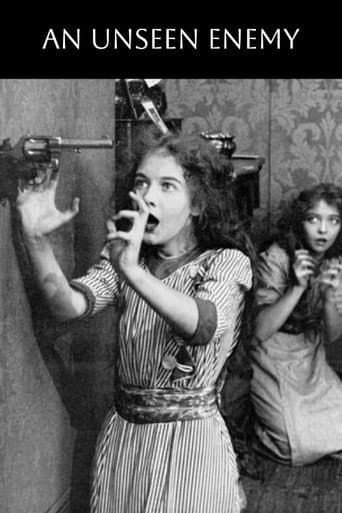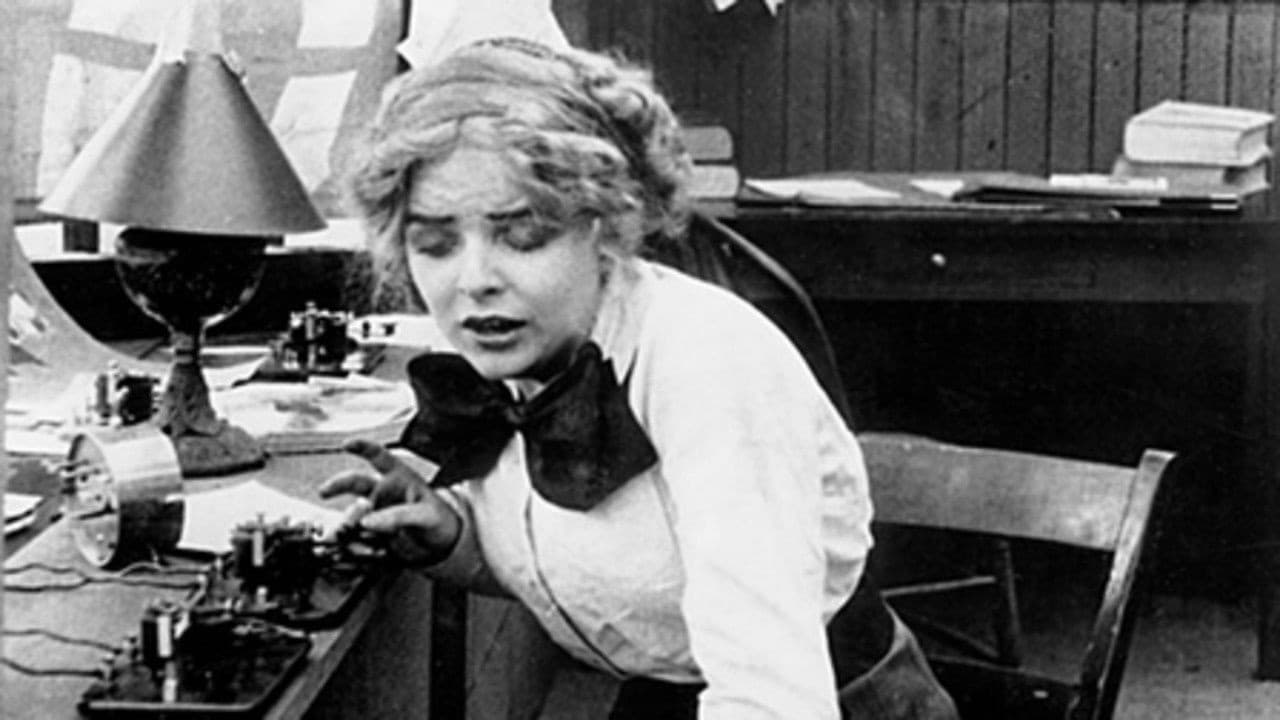
D.W. Griffith at his most economically thrilling. A young woman takes over her father's post as telegraph operator at a remote railway station. When bandits arrive to rob the payroll, she barricades herself inside and frantically wires for help. Griffith cross-cuts between the besieged operator, the approaching rescue train, and the criminals trying to break in — building suspense through parallel editing with a precision that was revolutionary in 1911. The final reveal of how she held off the robbers is a delightful twist. In just seventeen minutes, Griffith essentially wrote the grammar of the thriller.
Archive essay on Griffith's innovative editing techniques and narrative cross-cutting.
Comparative analysis of narrative editing innovation in early American cinema.

Blanche Sweet
Daughter of the Lonedale Operator

George Nichols
The Lonedale Operator

Francis J. Grandon
The Engineer

Wilfred Lucas
The Fireman

Edward Dillon
The Telegrapher

Edna Foster
Messenger on Bicycle

Verner Clarges
In Payroll Office

Joseph Graybill
A Tramp
Guy Hedlund
On Train

Dell Henderson
A Tramp

W. Chrystie Miller
In Station Lobby
W.C. Robinson
In Payroll Office
writer
cinematographer